One blog post isn’t enough to explain all the complexities of life with bilateral cochlear implants, but it can act as an introduction. Cochlear implants are devices in which people experiencing severe to profound sensorineural hearing loss can use to regain some hearing. They consist of two main parts. The receiver is surgically implanted underneath the skin behind the ear and stimulates the auditory nerve with a series of electrodes. The transmitter is the exterior piece. It has the microphone and speech processor, so it picks up sounds and sends them to the transmitter. The two communicate through magnets which connect through the skin.

That’s the basic science behind cochlear implants. I currently have two, one for each ear. My implants are something I have to think about constantly. I have to make sure my batteries are charged, that I’m looking at people when they speak to me, that I’m aware of my surroundings in case I miss something, and so on. My daily life is different because it has to revolve around my implants because I rely on them to communicate. Even my alarm clock is different- it vibrates my mattress to wake me up in the mornings.

*Fun Fact: I slept through a sonic boom that resulted after a NASA launch.
Deafness is a big spectrum, and this is just where I happen to land on it. Cochlear implants are much more complicated than what I can fit here. I’ve even written several essays on this topic, so condensing it is difficult. I hope I’ve been effective in educating you and that you leave this with a more nuanced understanding of what it’s like to live with cochlear implants.
Definitions:
- Cochlea: a cavity in the inner ear where the nerve impulses are produced as a reaction to sounds
- Bilateral: affecting both sides
- Speech processor: This is where the microphone of the transmitter sends the sounds. It acts as a computer, programming the sounds to be sent to the receiver.
- Sensorineural hearing loss: There are two main types of deafness, sensorineural and conductive. Sensorineural means there is an issue with the nerve pathways in the inner ear. Conductive means there is a physical barrier, preventing sounds from reaching the inner ear. Only the former type of hearing loss qualifies for cochlear implants.
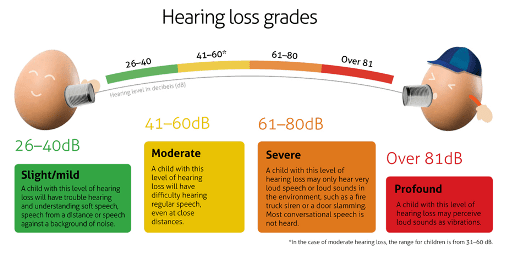
- Severe to Profound: There is a scale of hearing loss that measures the range of decibels a person can hear. Only people who fall under the severe to profound categories qualify for implants.
 Advanced Writing, PRAD 356 W21